
The Bigger Picture on Water Infrastructure and What It Means for Polk County

Polk County’s Water Future Is Already Under Pressure. Here Is What You Need to Know.
Across Polk County, the conversation about aging pipes and failing infrastructure is not just about what is underground today. It is about where the water comes from, how long it will last, and who is paying attention.
Where Polk County’s Water Comes From
Nearly every drop of drinking water in Polk County and across most of north and central Florida comes from the Upper Floridan Aquifer, a vast underground limestone formation that spans roughly 100,000 square miles beneath Florida and parts of Alabama, Georgia, South Carolina, and Mississippi. It is one of the most productive aquifers in the world and the primary drinking water source for nearly 10 million people.
In Polk County, every city and every unincorporated community depends on it. Lakeland, Winter Haven, Bartow, Haines City, Lake Wales, Auburndale, Fort Meade, Dundee, Davenport, and all 15 member governments of the Polk Regional Water Cooperative draw from the same source. Winter Haven alone pulls roughly 9.4 million gallons per day through 22 wells drilled approximately 800 feet into the ground, feeding nine water treatment plants that serve the city.
The problem is that the aquifer is not keeping up.
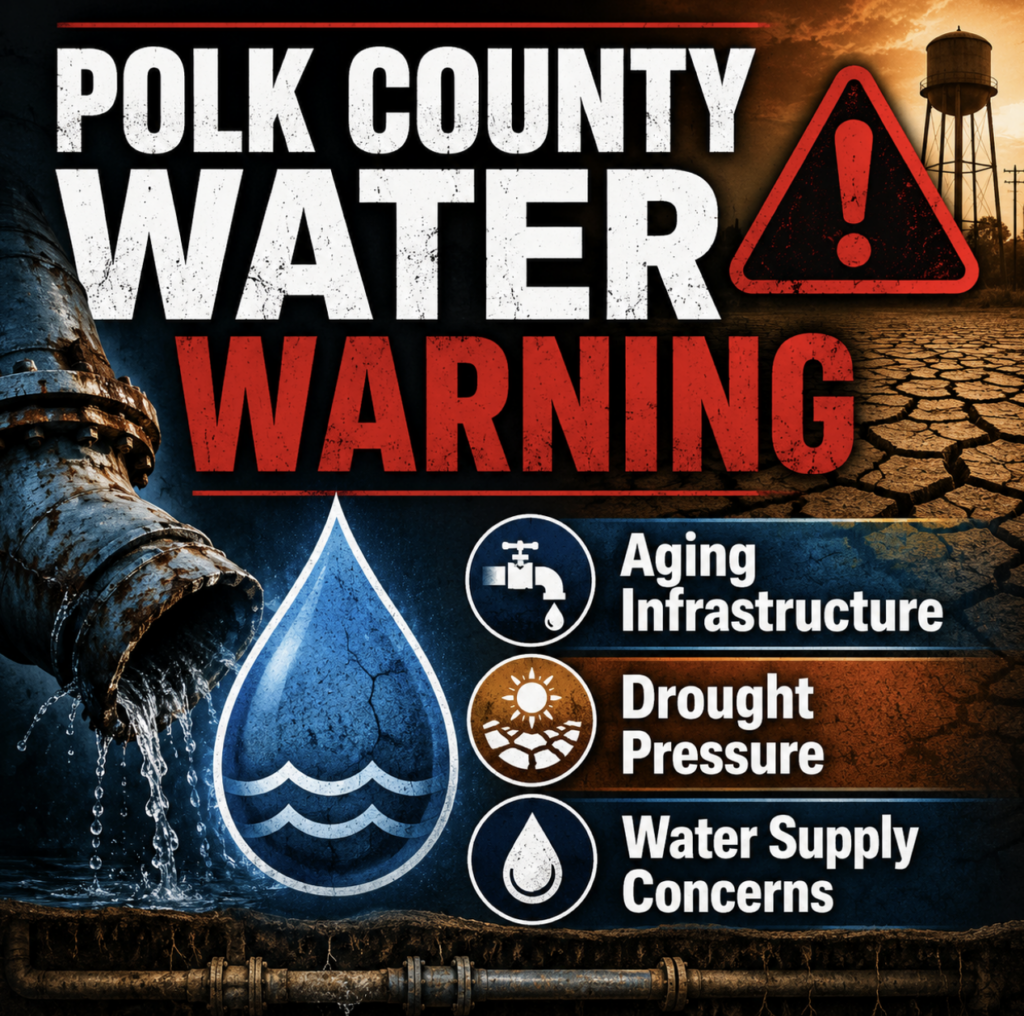
State water managers have determined that the Upper Floridan Aquifer in Polk County will reach its maximum sustainable withdrawal limit by the end of 2025. Polk County’s projected water demand is approximately 109 million gallons per day by 2040, but the aquifer’s sustainable yield is only 72 million gallons per day. The U.S. Environmental Protection Agency has stated the aquifer is projected to be unable to meet drinking water demand by 2035, with the strain already threatening the drinking water of an estimated 635,000 people across the region.
That is not a future warning. That deadline is now.
The 2026 Drought Made It Visible
In March 2026, the Southwest Florida Water Management District declared Phase III extreme water shortage restrictions across the region after recording a 13.7-inch regional rainfall deficit over the prior 12 months. It was the first Phase III declaration since May 2017. Restrictions limiting irrigation to once per week were set to remain in effect through July 1, 2026, across Polk County, including Winter Haven.
What Some Cities Are Doing About It
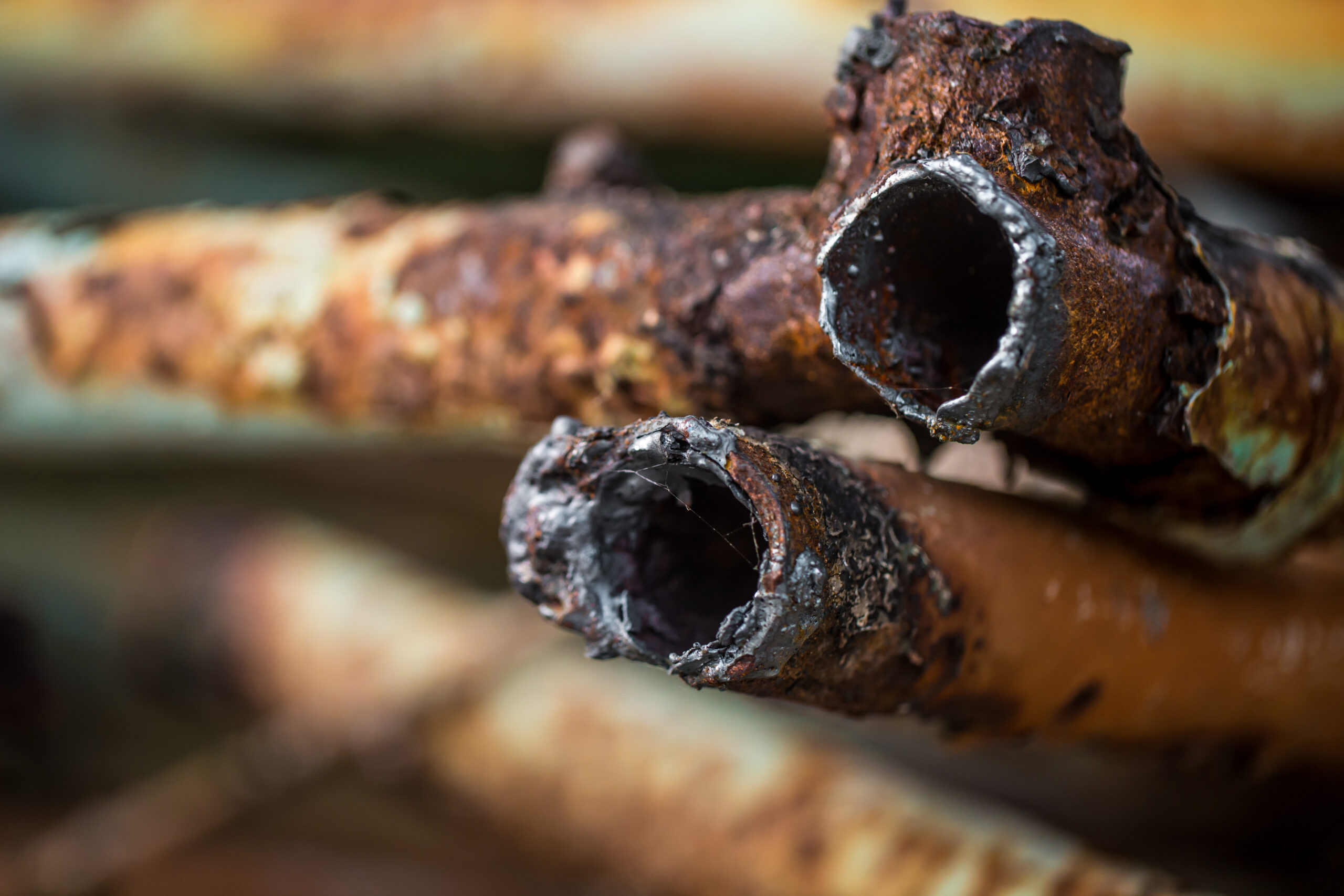
Fort Meade is already living with the consequences of delayed infrastructure investment. The city’s water lines, built in the 1950s and 1960s, are past their useful life. Its wastewater replacement costs, estimated at $15.6 million in 2021, have nearly doubled since. Funding remains unresolved.
On May 11, 2026, the Winter Haven City Commission approved a grant agreement with the Florida Department of Environmental Protection for the Reclaim Transmission Loop Project, a roughly three-mile expansion of the city’s reclaimed water distribution system. Total estimated construction cost is $4 million. The FDEP Alternative Water Supply and Restoration Program is providing $1.5 million of that with no required city match.
The project will extend a reclaimed water transmission main from the intersection of County Road 653 and Thompson Nursery Road to Cypress Gardens Boulevard. The goal is to reduce demand on the Floridan Aquifer by replacing groundwater with treated, reused water for irrigation, which currently accounts for an estimated 38 to 50 percent of the city’s total water pumping.
Water Department Director Gary Hubbard described the project as designed to interconnect and expand the city’s reclaimed water distribution system to maximize its beneficial use while reducing demands on the traditional water supply.
The Regional Picture
Winter Haven is a member of the Polk Regional Water Cooperative, a consortium of Polk County and its 15 municipal governments formed to develop alternative water sources. The cooperative is currently building two reverse osmosis wellfields tapping the deeper Lower Floridan Aquifer, one near Frostproof and one in Lakeland, with a combined capacity of roughly 22.5 million gallons per day. Total project cost is approximately $598 million, funded through a $305 million EPA WIFIA loan and a $293 million Southwest Florida Water Management District grant. The Southeast Wellfield near Frostproof alone will supply alternative water to 11 different Polk County municipalities when complete.
Separately, the EPA has invited Winter Haven to apply for a $178 million WIFIA loan for the city’s broader One Water program, a long-term plan developed with Black and Veatch that includes wetland restoration, aquifer recharge, and reuse expansion. That loan has not yet closed.
What This Means Locally
The challenges Fort Meade and Winter Haven face are not isolated. They are the same story, playing out at different speeds across every municipality in Polk County, and against a backdrop of a water supply that state regulators say is already at its limit.
The Citrus Tea will continue reporting on water infrastructure and supply across Polk County.
Sources
- Fort Meade City Commission Meeting, June 9, 2026, Water and Wastewater Infrastructure Briefing, presented by Evelyn Guffey, Director of Water and Wastewater, and City Manager Bell
- City of Winter Haven City Commission Meeting, May 11, 2026, agenda and approval of FDEP Grant Agreement, Reclaim Transmission Loop Project
- Florida Department of Environmental Protection, Alternative Water Supply and Restoration Program
- Southwest Florida Water Management District, Phase III Water Shortage Order, March 24, 2026
- U.S. Environmental Protection Agency, WIFIA Loan Program, Polk Regional Water Cooperative project page
- Polk County Utilities, Water Conservation Services, polkfl.gov
- Polk Regional Water Cooperative, Water Supply Improvement Project, Carollo Engineers
- Southwest Florida Water Management District, Polk Regional Water Cooperative overview, WaterMatters.org
- U.S. Geological Survey, Floridan Aquifer System Groundwater Availability Study, fl.water.usgs.gov
- Mid Florida Newspapers, Four Corners Sun, “Big Changes Coming for Water Use and Development in Polk County,” May 4, 2025
- City of Winter Haven, Frequently Asked Questions, Water Supply, mywinterhaven.com
- Featured photo credit: Florida Aquifer Geology report presentation, September 2016