
Rabid Cat Attack in Lakeland Puts Spotlight on Polk County’s Stray Population Crisis

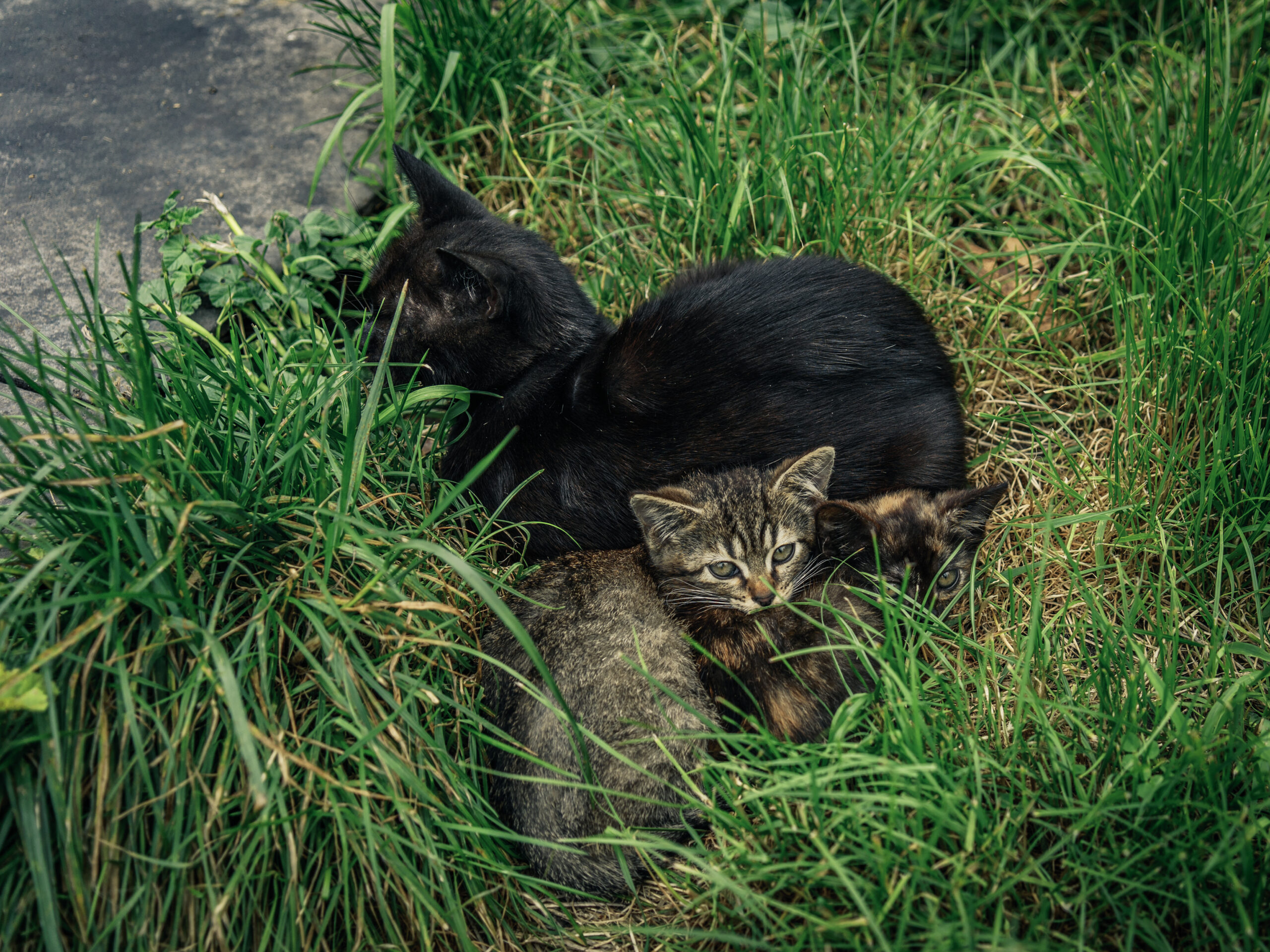
“A stray cat being fed by a north Lakeland resident attacked five people and a puppy in the Glen Road area before dying and testing positive for rabies,” the Polk County Sheriff’s Office announced Sunday.
Animal Control received reports during the first week of June about the cat biting multiple people. Victims ranged in age from 9 to 33. A 33-year-old woman had to use a baseball bat to fend off the animal. A 13-year-old boy was attacked at the end of his driveway while taking out the trash.
Officers set traps and captured 10 other strays before finding the cat dead under a Glen Road home on June 11. The state confirmed a positive rabies test on June 12. All victims were urged to seek medical treatment.
Angelica Perez, 31, who had been feeding the cat along with other strays in the area, was cited for having roaming cats, failing to vaccinate the animal and for injury to a person due to her negligence. A dog she owns has been quarantined after exposure to the rabid animal.
Animal Control has placed additional traps in the area and is working with the Health Department on the rabies exposures.
“This unvaccinated roaming stray cat with rabies attacked and bit five people, and that speaks for itself,” Sheriff Grady Judd said.
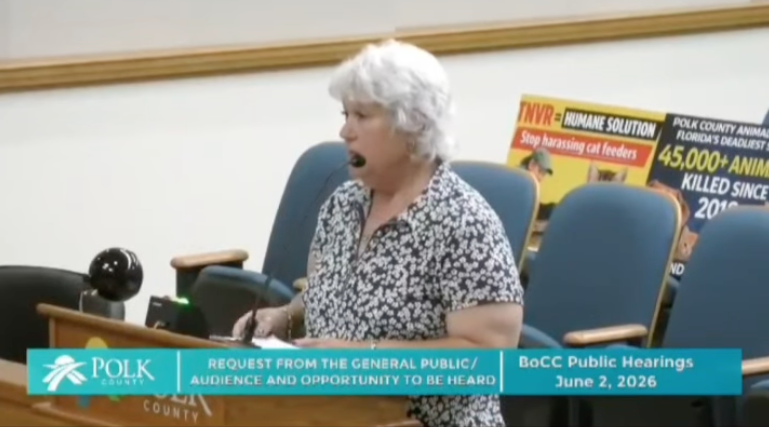
The incident comes as local animal welfare advocates continue pushing Polk County to address its stray cat population more broadly. Eve Salimbene of the Coalition for Animal Rights and Education in Polk County told the Board of County Commissioners during public comment on June 2 that the county needs to upgrade its quarantine and isolation facilities. Without proper separation space, she said, sick and exposed animals cannot be kept from healthy ones, and that gap affects transfers, adoptions and public health.
Salimbene said the Glen Road cat is an example of a gap in county services, not just an enforcement failure.
“It is important to note that this was an owned, inside/outside cat that the whole community knew. A low-cost voucher would have enabled him to be vaccinated and fixed if the county offered that service. Also, TNVR would put a rabies vaccine barrier between the humans and wildlife,” she said.
The coalition supports Trap, Neuter, Vaccinate, and Release, or TNVR, as an alternative to euthanasia-based population control. Under TNVR, stray and feral cats are humanely trapped, sterilized, vaccinated for rabies, and returned to their territory. Neighboring counties including Hillsborough, Pinellas, Osceola and Pasco have adopted the program, with live release rates of 90% or more.
Polk County has not adopted TNVR as official policy. Florida Statute 823.15 establishes it as state policy that every feasible means be used to reduce the number of unwanted puppies and kittens, language that TNVR advocates argue supports the program’s adoption. Some opposition has historically cited other Florida statutes, including those governing abandonment and non-native species release, though legal analysts note those statutes apply to wildlife, not domestic animals.
Sources: Polk County Sheriff’s Office news release, June 15, 2026, polksheriff.org; Polk County Board of County Commissioners regular meeting, public comment, June 2, 2026; Polk County Sheriff’s Office Animal Services FAQ, polksheriff.org; Florida Statute 823.15; Pinellas County Animal Services, pinellas.gov; PMC/National Institutes of Health, “Implementing Nonlethal Solutions for Free-Roaming Cat Management,” pmc.ncbi.nlm.nih.gov