
Polk County Property Tax Increase Would Raise Teacher Pay to Keep Staff

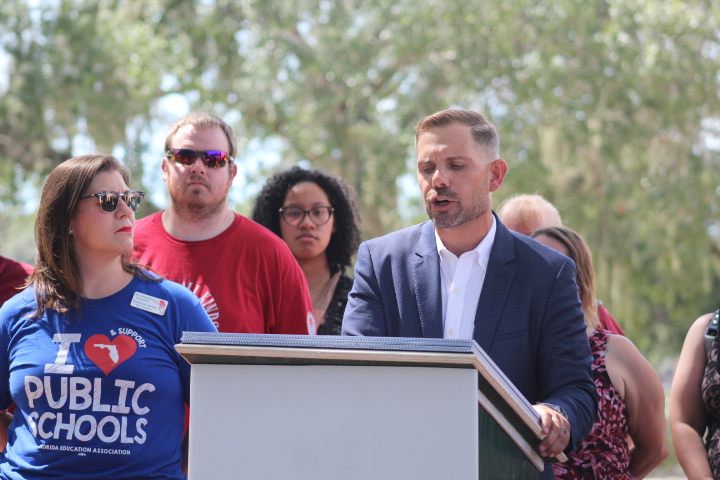
Supporters of a proposed 1.0-mill property tax increase for Polk County Public Schools made their public case Tuesday at the Lake Eva Event Center in Haines City, launching a campaign that will ask voters in November to raise their property taxes to pay teachers more.
Ryan DelliVeniri, chair of Citizens for Quality Education Polk, told a crowd of teachers, union members and education supporters that the district opened the 2026-27 school year short more than 500 teachers.
“More than 500 classrooms are without the permanent qualified teachers our students deserve,” DelliVeniri said. “That shortage affects everyone. It means larger classes, fewer course options, greater pressure on the educators who remain, and less individual attention for their children.”
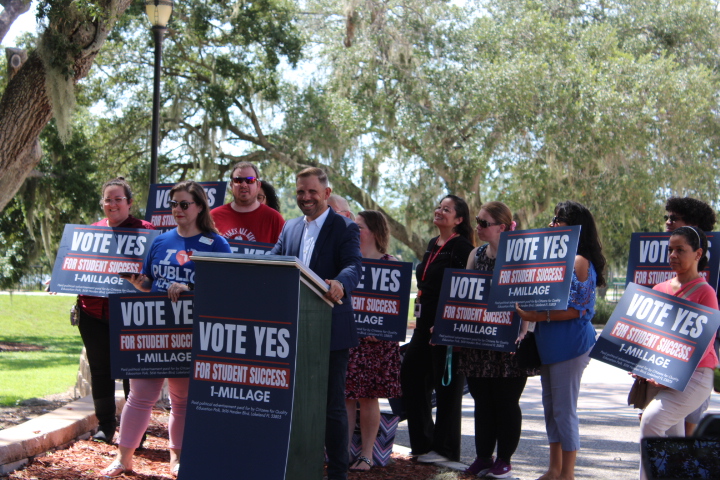
Stephanie Yocum, President of the Polk Education Association, told The Citrus Tea News that the district plans to hold informational meetings ahead of the November vote to inform residents about the measure. Yocum has advocated for higher wages for staff and teachers for more than 10 years.
Superintendent Frederick Heid addressed the crowd and answered questions about the measure.
Voters will decide the question on the Nov. 3 general election ballot. The School Board of Polk County conditionally adopted a resolution to levy the additional mill annually from July 1, 2027, through June 30, 2031. The Polk County Board of County Commissioners voted unanimously on Nov. 18, 2025, to place it before voters.
The ballot title is “Millage for School Safety, Teachers, and Career Education.”
Average Cost per Homeowner for the Next four years
A mill equals $1 for every $1,000 of taxable property value. The proposal would raise the local school millage from 2.248 mills to 3.248 mills.
The district projects the levy would generate about $79 million a year. State law requires the money be shared with charter schools based on enrollment, which would send roughly $13.6 million, about 18 percent, to charter operators. That leaves Polk County Public Schools an estimated $65.6 million.
Of the district’s share, 80 percent, or about $52.5 million, would fund additional compensation for school-based employees. The remaining 20 percent, about $13.1 million, would support school safety and security, fine and performing arts, workforce development and career technical education, and early childhood education.
For homeowners, the district uses the county’s average home market value of $284,419. After the standard $25,000 homestead exemption, taxable value drops to $259,419, putting the added annual cost for that average homesteaded property at roughly $259. Homes assessed below that average would pay less, and homes above it would pay more. Non-homesteaded property, including rentals, second homes, and commercial buildings, would be assessed at full taxable value.
The levy is not permanent. Florida law caps it at four years, after which voters would decide whether to renew it.
The Case Supporters Are Making
The pay comparison is the campaign’s central argument, sourced directly from the district’s own salary data.
Polk’s average teacher salary was $51,613 in 2024-25, with a starting salary of $47,500. Among Florida’s seven largest districts, Polk ranked last in both.
Broward, Miami-Dade, Duval, Hillsborough, Orange, and Palm Beach reported average salaries between $56,364 and $61,847, and all six already levy a 1.0-mill operating referendum.
The pattern repeats along Polk’s borders. Highlands, Hillsborough, Manatee, Orange and Pasco all levy 1.0 mill for school operations. Lake County levies 0.75 mill. Polk levies none.
Per-student funding tells a similar story, citing different figures. The district’s referendum FAQ says Polk ranks 53rd among Florida’s 67 districts; the campaign website says even lower at 61st out of 67.
The district also reports Polk received about $291 less per student than the state average in 2025-26, $8,839.64 compared with $9,130.41.
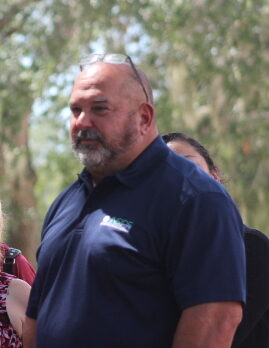
Heid said the School Board’s decision to send the measure to voters was unanimous.
“I’m proud of the fact that seven board members unanimously voted to put this on the ballot, and I think it represents our sincere commitment to our community,” Heid said.
He said Polk has improved to an 88 percent teacher retention rate while neighboring districts sit at 92 percent or higher, a gap he attributed to those districts having passed referendums.
“The realities of the cost of living, housing costs, and others are very real,” Heid said. He said the district has offered what it can each year, yet staff still struggle.
Many teachers report that they are working one or two part-time jobs just to make ends meet.
Why State Money Has Not Closed the Gap
The referendum campaign arrives two months after the state budget produced far less local salary money than its headline figure suggested.
Gov. Ron DeSantis signed Florida’s $117.6 billion budget for 2026-27 on June 29. It included $1.56 billion for statewide teacher salary increases, with roughly $200 million earmarked specifically for teachers with 10 or more years of experience.
Yocum said in June that eligibility rules narrowed the local effect considerably.
“After the TSIA allocation of $6.7 million for Polk County Public Schools, with the charter school allocation removed and other mandated expenditures, the district’s general fund has about $2.1 million in new money for teacher salary increases, leaving roughly 9,200 employees ineligible for TSIA funding, support staff among them,” Yocum said.
She said the state budget raised Polk’s Base Student Allocation by only $85, a figure that includes the Teacher Salary Increase Allocation and other mandatory funding categories, and that the Legislature has repeatedly narrowed TSIA eligibility since the program began in 2020-21.
Heid has said the district chose to meet the required minimum teacher salary as early as possible, which allowed it to direct later recurring state dollars toward salary compression for experienced teachers. He acknowledged that teachers with fewer than 10 years of service continue to feel pressure from housing, insurance and inflation costs while most of the new state money flows to more experienced staff.
That gap is part of what the referendum is pitched to address. Unlike TSIA, the millage money would not be restricted to classroom teachers with a decade of service. The district’s stated intent covers paraeducators, bus drivers, cafeteria and custodial staff, counselors, school safety personnel, maintenance workers and school administrators.
What the District Says Could Happen If It Fails
The district’s published position is that a failed referendum means continued staff losses to higher-paying neighboring districts, with effects on class sizes, staffing consistency, academic and extracurricular offerings, and the ability to operate schools and buses. The FAQ states that program reductions may become necessary to balance the budget, that arts equipment cannot be replaced at the needed pace, and that safety, early childhood, and workforce programs may face cuts or limits.
The district says it has no other local mechanism available. Two commonly suggested alternatives are barred by state law. School impact fees, charged on new residential construction, may be spent only on capital needs such as buildings, land, and buses, and cannot legally cover salaries, benefits, or any recurring operating costs. The half-cent school capital outlay surtax voters already approved is governed by Section 212.055(6), Florida Statutes, which restricts it to capital projects and explicitly bars its use for operations.
On the argument that the district should cut administrative overhead instead, the district points to Florida Department of Education figures showing Polk spent $515.02 per student on general fund administration in fiscal year 2023-24 and $476.09 the year before, the lowest in the state in both years.
Comparable figures included Hillsborough at $746.24, Lake at $842.09, and Pinellas at $813.58, with Polk roughly $231 to $327 less than the neighboring districts.
What Voters Are Not Being Promised
The ballot language commits the money to categories, not to specific dollar amounts for individual employees.
Under Florida’s Public Employees Relations Act, the School Board must bargain in good faith with certified unions over any new revenue intended to affect pay or benefits. The district acknowledges that even with voter approval, the amounts, eligibility, distribution method, and structure would all have to be negotiated, including whether funds land in base salary or arrive as a recurring supplement, and whether every employee receives the same amount or payments are tiered by role and years of service.
Oversight would be conducted by a Community Finance Review Committee of 14 board-appointed community members plus district staff, meeting at least quarterly, with reports presented to the School Board and posted publicly.
The Affordability Question
The measure reaches voters during an unusually active moment in Florida’s property tax debate, and the county commissioners who were legally required to place it on the ballot made a point of separating themselves from it.
Polk County Commissioners initially moved to delay the vote to January, then reversed. During an agenda review, Commissioner Bill Braswell said the board wanted a clear distinction about the origin of the tax increase. Commissioner Martha Santiago said the concern was that residents would view the commission as the body raising the rate. Rick Wilson, who chaired the commission at the time, said the commissioners wanted to ensure the responsible entity received the credit.
Their legal room to move or reject the measure was limited. The county attorney cited Hillsborough County v. School Board of Hillsborough, a 2024 Second District Court of Appeal ruling holding that calling a school-directed referendum is a ministerial duty, meaning commissioners must place it on the ballot and cannot alter or block it. Commissioners have asked the Legislature to remove them from the process.

Polk voters will also decide Amendment 3, the DeSantis-backed constitutional amendment the Legislature approved in a June special session, which would raise the homestead exemption to $150,000 in 2027 and $250,000 in 2028 and needs 60 percent approval. That exemption expressly does not apply to school district levies. A homeowner who votes for both measures could see non-school property taxes fall while owing the full school millage, including the new mill, on taxable value.
No speakers opposing the referendum appeared at Tuesday’s press conference.
What Comes Next
Citizens for Quality Education Polk is running the political campaign under the banner “Vote Yes for Student Success.” Polk Education Foundation Executive Director Tracy Porter attended the press conference along with other members of the Foundation, the 501(c)(3) direct-support organization that raises money for Polk County Public Schools through scholarships, classroom grants and reading programs.
Polk Education Association President Stephanie Yocum said the school district is limited to informing and educating the public about the millage, and that the union supports the measure and is working to get educators informed about it. Florida law restricts public agencies from using public funds to advocate for or against a ballot measure, though they may distribute factual information. The advocacy work falls to the political committee.
“Every dollar raised will remain here in Polk County, serving Polk County students and schools,” DelliVeniri said. “The measure also provides for independent citizen oversight, so taxpayers can see that the funds are used as promised.”
The district’s referendum FAQ, ballot language and salary comparison tables are posted at polkschoolsfl.com under School Ballot Initiative. The campaign’s site is yesforstudentsuccess.org.
The committee says it plans to work across the county over the coming weeks explaining what the referendum would do and how the money would be spent. The district has released a presentation with a budget overview to provide a better understanding of the 2026 School Ballot Initiative titled: “Millage for School Safety, Teachers, and Career Education.” The full document is posted below.
The Citrus Tea News does not endorse or oppose ballot measures. We report on referendums and constitutional amendments without taking a position. We accept paid political advertising, which is clearly labeled and offered to all sides of a ballot question at the same rates. Advertising has no influence on our coverage.
Sources: “Superintendent and Teachers Union Offer Different Pictures of New State Budget’s Impact on Teacher Pay,” The Citrus Tea News, thecitrustea.com, June 30, 2026; School Ballot Initiative, Polk County Public Schools, polkschoolsfl.com; Frequently Asked Questions: 2026 PCPS Ballot Initiative, Polk County Public Schools, polkschoolsfl.com, Aug. 20, 2026; School Ballot Initiative Presentation, Polk County Public Schools, polkschoolsfl.com, Aug. 21, 2026; Vote Yes For Student Success, Citizens for Quality Education Polk, yesforstudentsuccess.org; About PEF, Polk Education Foundation, polkeducationfoundation.org; Section 212.055(6), Florida Statutes; Hillsborough County v. School Board of Hillsborough County, 395 So. 3d 1116 (Fla. 2d DCA 2024); CS/HJR 1-F, Florida Legislature, June 2026; “Polk County school tax referendum vote,” WTSP, wtsp.com, Nov. 4, 2025; “Polk County commissioners will vote next week on school board millage referendum,” WFLA, wfla.com, Nov. 14, 2025; “Polk County teachers push for raises as commissioners approve placing tax referendum on ballot,” Tampa Bay 28, tampabay28.com, Nov. 18, 2025; “Florida Legislature OKs tweaked property tax amendment for November ballot,” News 6, clickorlando.com, June 2, 2026; Polk Education Association press conference, Lake Eva Event Center, Haines City, Aug. 24, 2026