
Polk County to Become First U.S. Home of Cestoball, an International Sport With Deep Roots

A sport born in Argentina more than a century ago and carried across continents by a Kenyan sports leader is about to take root in Polk County, making this community the first in the United States to officially introduce Cestoball.
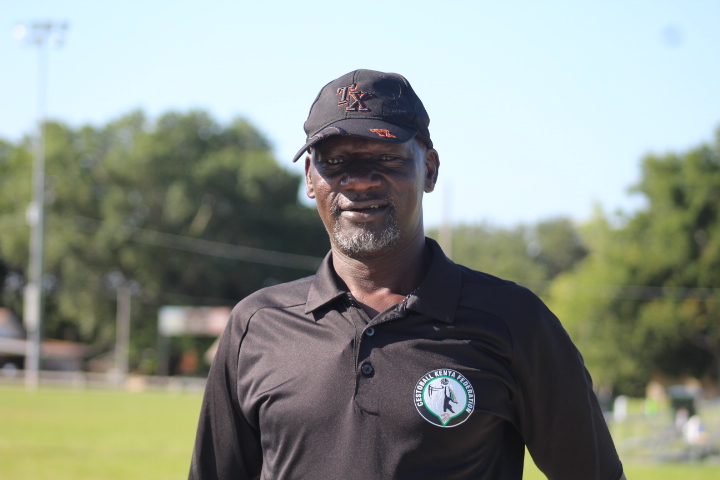
Lawrence Adera, founder and president of the Cestoball Kenya Federation and Secretary General of the Confederation of Africa Cestoball Association, moved to Polk County with a clear mission: build the sport he helped establish across Africa into something lasting on American soil, starting right here.
“Polk County is our starting point because every successful movement begins with one community,” Adera said. “Our vision is to establish a strong foundation here and then expand throughout Florida and eventually across the United States.”
129-year-old International Sport
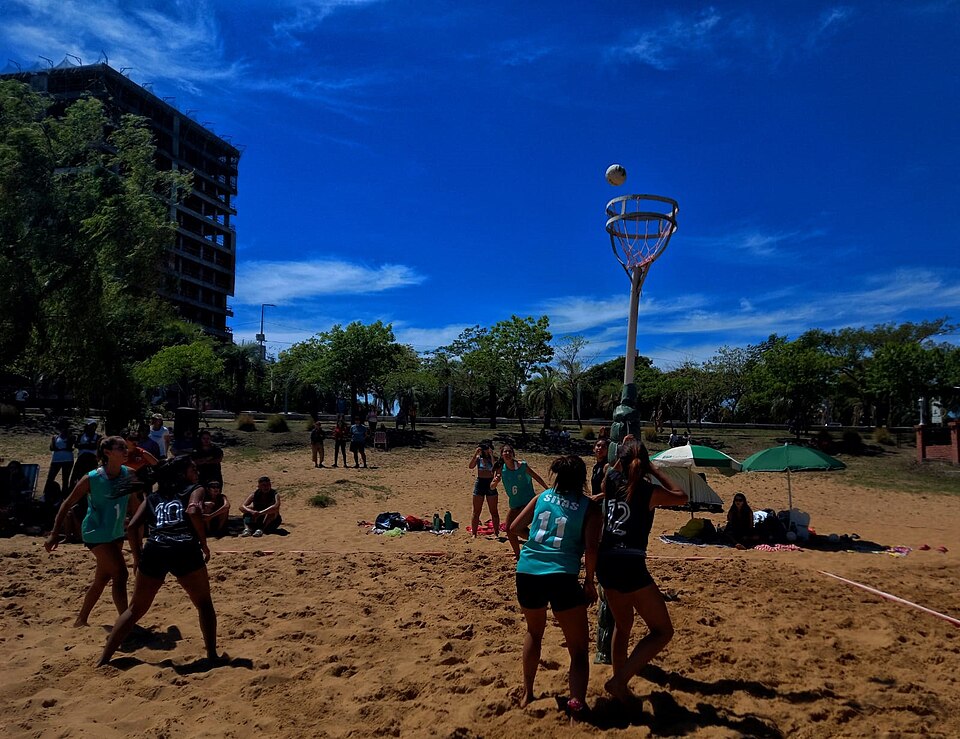
Cestoball (pronounced SESS-toh-ball) was created in Argentina in 1897 by Professor Enrique Romero Brest, a pioneer in Argentine physical education, under the original name “pelota al cesto,” meaning ball to the basket. The sport was incorporated into Argentina’s national physical education curriculum in 1903 and underwent a major modernization in 1986, when it was officially renamed cestoball. Today the International Cestoball Association oversees the sport across 22 member countries on five continents, with active federations in the Americas, Africa, Asia, Europe, and Oceania. Argentina has dominated international competition, with its national teams winning both the women’s and men’s titles at the sport’s first-ever World Cup, held in Bangalore, India, in 2023.
The game is played by two teams of six on a rectangular court. Players pass a ball into an elevated basket mounted on a pole without a backboard, requiring precision, teamwork, and strategic positioning. There is no dribbling, no rebounds, and no physical contact, making it fast-paced and accessible to a wide range of ages and abilities. Age divisions run from under-10 all the way through a senior category called Maxi, open to players 30 and older.
Adera is originally from Homa Bay County in western Kenya near Lake Victoria and is a member of the Luo community, one of Kenya’s largest ethnic groups, known for rich oral traditions, a fishing heritage, and a deep respect for education and community. He speaks English, Swahili, and Dholuo, his native language. Values rooted in that heritage, he said, continue to guide his work in sports development and youth empowerment.
He first encountered cestoball in 2019 through international sports networks, having already built years of experience as a coach and administrator across volleyball, soccer, netball, and other disciplines. Cestoball, he said, was different.
“I immediately recognized its potential to create opportunities for young people in Kenya and across Africa,” he said.
Adera founded the Cestoball Kenya Federation shortly after, introducing the sport to more than 30 schools and institutions across several counties in Kenya. He trained coaches, referees, and officials, organized regional and national competitions, and built relationships with international governing bodies. His work earned him the role of Secretary General of the Confederation of Africa Cestoball Association, connecting him directly to the sport’s global leadership. Kenya’s federation is recognized by the International Cestoball Association and featured on its international website.
What happened in Kenya in just a few years is exactly what Adera believes can happen here.
“Building a new sport requires patience, partnerships, and persistence,” he said. “Success isn’t just about competitions. It’s about developing coaches, educating teachers, engaging schools, training officials, securing equipment, and building trust within communities.”
Adera came to the United States in May 2024 and settled in Polk County, which he described as a welcoming and growing community with excellent schools, parks, and recreation programs. He established the USA Cestoball Association and began reaching out to local institutions.
The response has already exceeded expectations. On Aug. 7, Adera presented cestoball at the Polk County Public Schools Physical Education and Health and Safety Symposium, held at Lake Region High School. The event included a hands-on breakout session where physical education and gym teachers took to the court and played the sport themselves. At least 40 coaches signed up for coaching training that day.
“Once they learn about its history, fast-paced style, and emphasis on teamwork and inclusion, they become interested,” Adera said. “Schools, recreation professionals, and community leaders appreciate that it’s a sport that can create new opportunities for young people.”
Adera is in ongoing discussions with the Polk County School District athletic director about formally introducing cestoball through physical education programs, with a virtual orientation and coach-training session planned for later this month. Polk County Parks and Recreation has also expressed openness to using community facilities for demonstrations and youth programming.
Getting a program off the ground requires modest resources. A starting team needs 12 to 15 players, two goalposts with baskets, official cestoball balls, and access to an existing multipurpose or basketball court. The USA Cestoball Association has already acquired equipment and is developing coaching materials in preparation for introductory sessions across the county.
The biggest challenge, Adera said, is awareness. Cestoball has never had organized promotion or a national development program in the United States, and building momentum requires educating communities, recruiting coaches and volunteers, and securing funding and venues. His experience building the sport from scratch in Kenya gives him both a roadmap and a track record.
His one-year goal is to have active cestoball programs running in Polk County schools and recreation centers and to host the community’s first tournament. In five years, he hopes to see organized leagues and certified coaches across Florida, with American athletes competing in international events.
The vision extends beyond competition. Adera sees Polk County becoming the anchor of an international network connecting American youth with players in other countries through coach exchanges, virtual learning, and eventually international matches.
“Sport has the power to connect communities across cultures,” he said. “I believe Cestoball can become a bridge that creates those opportunities for young people.”
Families, schools, coaches, volunteers, and community organizations interested in getting involved with Cestoball in Polk County are encouraged to contact the USA Cestoball Association. The program is actively seeking schools, recreation partners, coaches, volunteers, and sponsors.
For those interested in learning more about Cestoball, contact Lawrence Adera via email at [email protected].

Your community. Your news. Your right to know. The Citrus Tea News.
Follow us on Facebook and Subscribe at thecitrustea.com for breaking news and weekly updates from The Citrus Tea News.
FAQs
What is Cestoball and how do you pronounce it?
Cestoball, pronounced SESS-toh-ball, is a fast-paced team sport created in Argentina in 1897. Two teams of six compete to score by throwing a ball into an elevated basket mounted on a pole without a backboard. There is no dribbling, no rebounds, and no physical contact.
Why is Polk County significant for cestoball in the United States?
Polk County is the first community in the United States to officially introduce cestoball through the USA Cestoball Association, led by Lawrence Adera. No organized cestoball program or national development effort existed in the U.S. before this initiative.
Who is Lawrence Adera?
Lawrence Adera is the founder and president of the Cestoball Kenya Federation and Secretary General of the Confederation of Africa Cestoball Association. He moved to Polk County in 2024 and established the USA Cestoball Association to introduce the sport to American schools and communities.
How can Polk County schools and coaches get involved with Cestoball?
Schools, coaches, volunteers, and community organizations interested in cestoball can contact Lawrence Adera and the USA Cestoball Association directly at [email protected]. The program is actively seeking partners, coaches, sponsors, and participants.
How quickly did Cestoball grow in Kenya after Lawrence Adera introduced it?
After Adera founded the Cestoball Kenya Federation in 2019, the sport spread to more than 30 schools and institutions across several Kenyan counties within a few years. He trained coaches and officials, organized regional and national competitions, and earned international recognition from the International Cestoball Association.
Sources: Lawrence Adera, interview, USA Cestoball Association, August 2026; International Cestoball Association, internationalcestoball.com; “Argentina Won the ICA Cestoball World Cup 2023,” International Cestoball Association, internationalcestoball.com, June 1, 2023; “Cestoball,” Wikipedia, en.wikipedia.org