How Polk County Government Really Works — and Why you should pay attention before decisions are made, not after

If you have ever opened your water bill and seen 12 other neighbors ranting on Facebook about the bill going up another fifty bucks, or driven past a new subdivision and wondered who approved it, you will know for certain, by the end of this.
A little disclaimer from me: I am not, nor do I claim to be, a legal expert or government guru. Truth be told, I didn’t even like history that much.
What I am is a fellow neighbor, living alongside you here in Polk County, as a concerned citizen with a desire to help build a better, stronger community for my family. I’m also a former teacher and educator, always willing to do my part to find and share answers, even if I have to do a little digging to find them. And digging I did.
So, you asked: Who decided to add a new playground at the park? Whose choice was it to widen the highway in the middle of rush hour, making me late for work…again?
To all of these questions, there’s an easy answer and a longer answer. I hope you will stick around for both, because I can almost guarantee you’ll learn something new. I did.
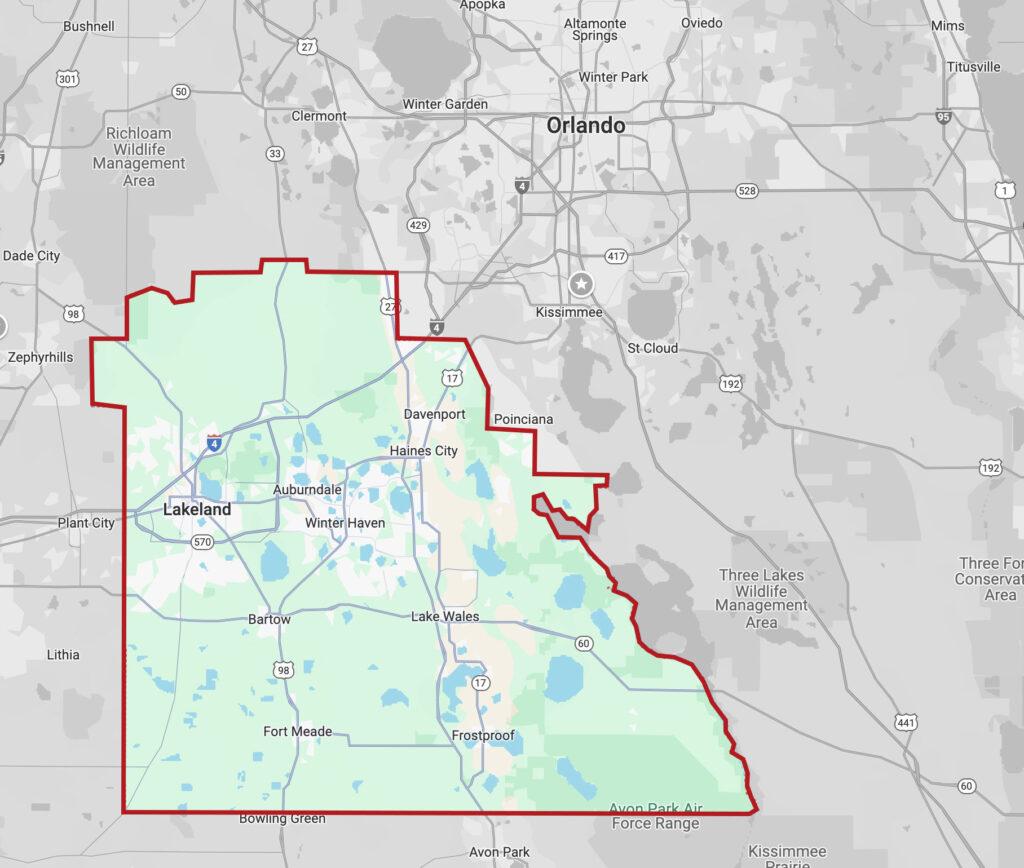
Before we get to that, however, most know that Polk County, FL is one of the fastest-growing counties in the country over the last five years. Recent estimates have us at nearly 850,000 people in 2026, and researchers at the University of Florida’s Bureau of Economic and Business Research project we could surpass 1 million by 2030…years ahead of schedule. For some, that brings optimism with opportunities, especially as there are somewhere around 18,000 businesses registered, and for others, it increases anxiety and a desire for simpler, quieter times. Whether your glass is half full or half empty, we’ve certainly all felt the growth pains with increased traffic, overcrowding in schools, more competition for local jobs, and water pressure issues.
While the big cities (Orlando, Tampa, and Miami) might see Polk County as the proverbial step-cousin of Florida, we have more than put ourselves on the map as a place where things are happening. Unfortunately, even I have been guilty of being less informed when it comes to my city and county government, even with my follows and interactions on social media. Here’s the kicker…I know I’m not alone. It’s true, none of us can be at every meeting or informed about every agenda, but we do need to be aware of the bigger decisions that affect our communities and neighborhoods, and not just after they happen. By that time, the vote has already happened, and the money’s been spent on this or that project. Worse, the window to be heard before decisions are made closes weeks earlier than you probably realize.
And so I thought to myself: “Self? What if there were a single place where residents could be more informed about what’s going on?” I just wondered what might happen if citizens were ‘in the know’ about all these things before they happened, and when there was actually something they…we…us, could do about it.
In fact, a lot of people have been asking this exact question. I hear it from neighbors living down the street and friends two cities over. I heard it come up in my own town hall last week, and I heard it again from a colleague living in Haines City, where 22,000 residents are registered to vote but fewer than 2,000 of them — about 9 percent — showed up to pick a city commissioner last spring. In a city of 44,000 people, fewer than 2,000 made the call.
To be sure, there are loud voices all over this county, and any one of us could recall someone who is a little too loud, right smack dab in the middle of our social media feed.
The biggest problem isn’t the voices themselves; it’s that they’re caught in silos of group membership and mysterious social media algorithms that feed us what meta decides is important.
Sure, we follow pages that post booking reports and traffic accidents or the occasional breaking story about misconduct from those in authority, but when I started paying more attention to what real residents were saying, I found that the same questions and concerns were being posted and the same complaints were being made, everywhere in the county. Sadly, they aren’t the type of story to land on the front page of big news. That doesn’t mean they don’t matter to Polk County residents. The Citrus Tea was created to bring the community back together, in one place. To open up opportunities for mutual concerns that affect everyone to
Now that we’ve got all that out of the way, let’s go back to the original question about who is making all the decisions affecting our communities, along with the easy answer I promised.
The Short Answer
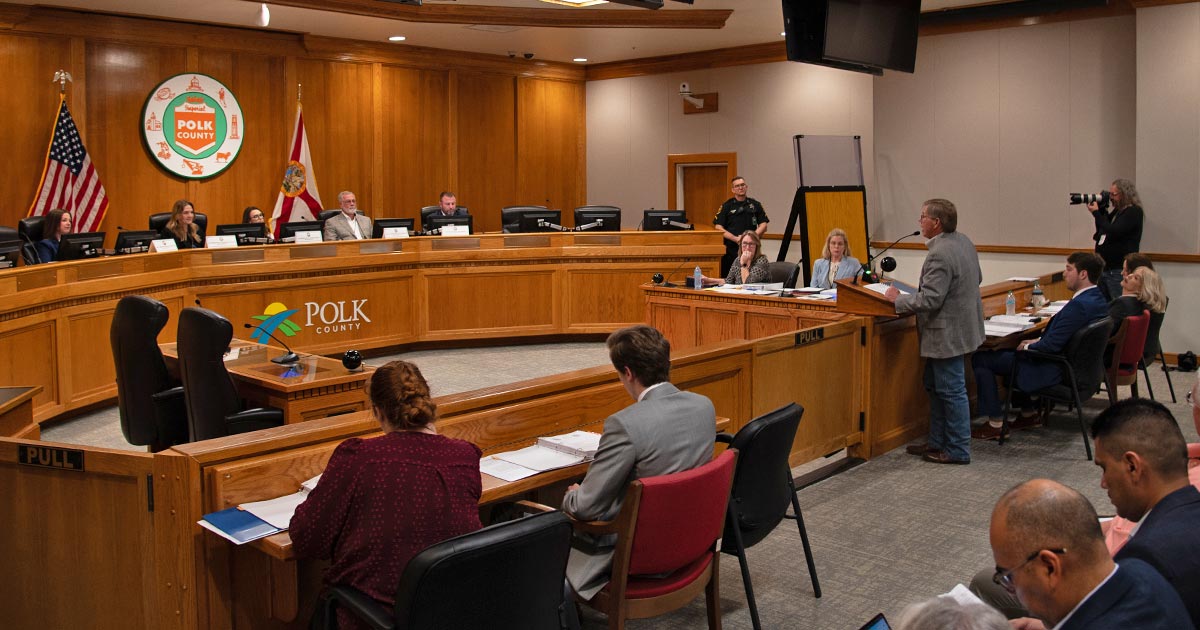
There are five elected commissioners on the Polk County Board of County Commissioners (BOCC) who meet on the first and third Tuesday of every month at 9 a.m. inside the County Administration Building at 330 W. Church Street in Bartow. You could say they are basically running the county, but every municipality has elected commissioners who sit on regional boards and committees and help steer those decisions based on their own city or town’s priorities. In these meetings, they set the budget, approve contracts, write rules, and shape what Polk County will look like for the next generation. The decisions being made right now will determine whether the growth is smart, fair, and livable.
In one easy sentence: your city’s commissioners run things at the city level, and the county BOCC runs things at the county level. The BOCC also carries Polk’s biggest fights up to Tallahassee, where we are essentially elbowing 66 other Florida counties for the same pot of dollars, the same policy attention, and the same regulatory wins.
The Longer Answer
If five commissioners make decisions for nearly a million people, you would think we’d know their names. We mostly don’t. So let’s fix that, because they are not interchangeable, and they don’t all come from the same place.
I introduce to you, the Polk County Board of County Commissioners (May 2026).
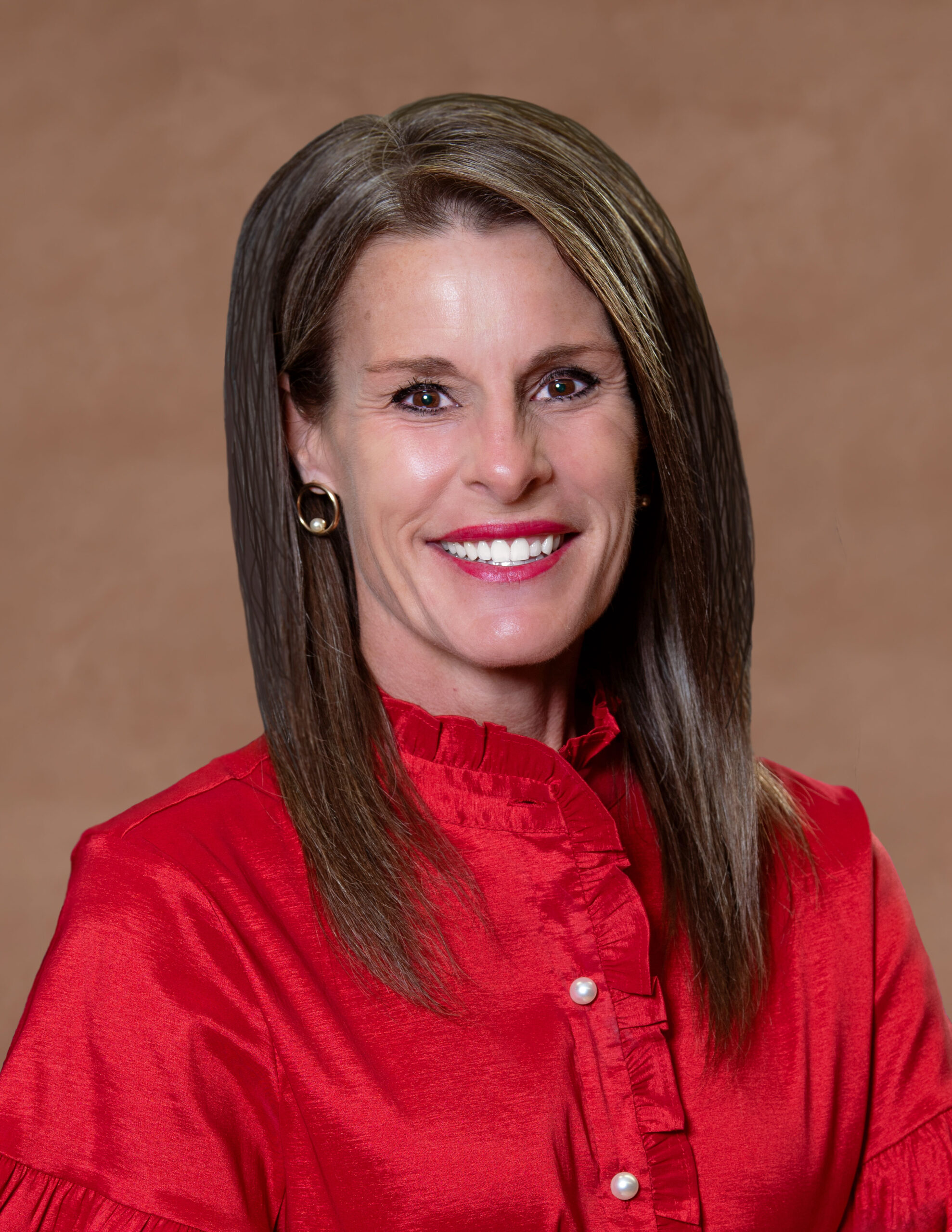
Becky Troutman represents District 1 in Lakeland. Before she was a commissioner, she ran two small businesses — one in school psychology, one in interior decorating — and spent six years on the Polk County Planning Commission, which is the body that hears every major land-use case before it ever reaches the BOCC. She also volunteers with Guardian Ad Litem and the United Way of Central Florida. If you have a question about how the planning system actually works inside Polk, she is the commissioner who has been on both sides of the table. She was first elected in 2024 with about 63% of the general election vote.
Rick Wilson represents District 2 in Bartow. He’s a second-generation rancher and Polk County native who was first elected in 2018 and re-elected without opposition in 2022. He’s also in the Polk County Sports Hall of Fame, which tells you how long his roots have grown here. His term ends this year.
Bill Braswell is the Vice Chair and represents District 3, which covers Auburndale, Winter Haven, and Lake Alfred. He spent 22 years in the Air Force, runs a blueberry farm, and served on the Planning Commission before joining the BOCC. He is the commissioner most likely to be talking about water — because his district sits in the part of Polk where every new house adds pressure to a regional aquifer.
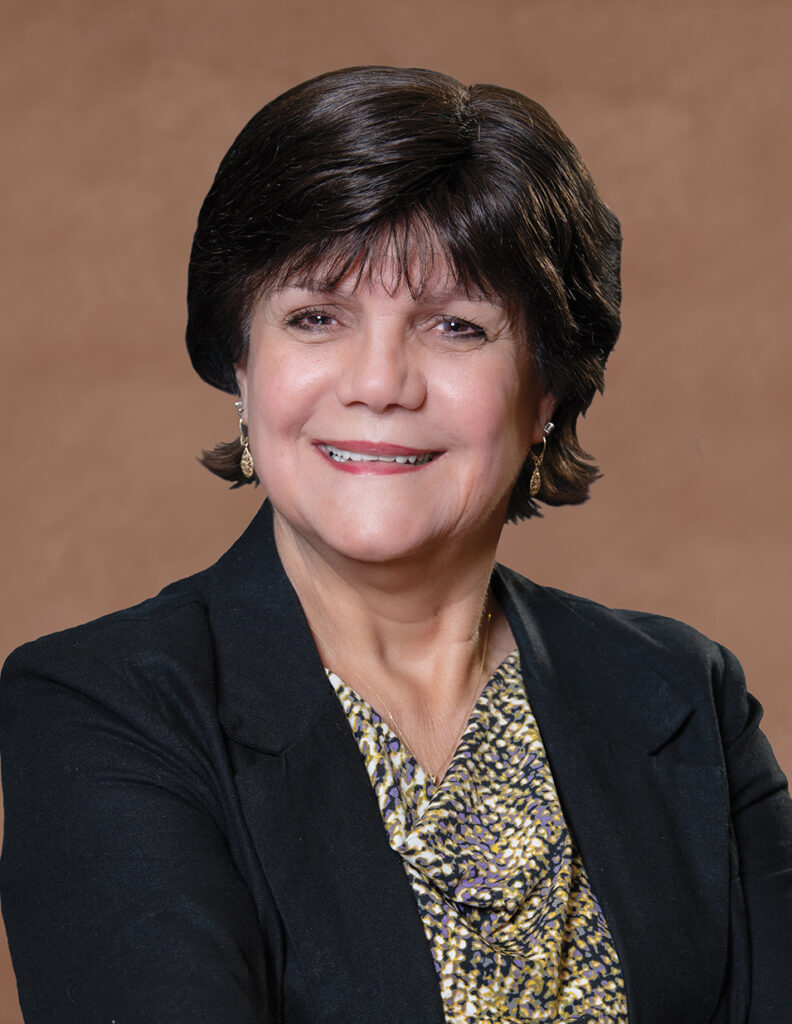
Dr. Martha Santiago is the current Chair and represents District 4 — Winter Haven east, Haines City, Davenport, Lake Hamilton, Loughman, Four Corners, and the Polk side of Poinciana. She was first elected in November 2018 and re-elected in November 2022. She is the first Hispanic woman elected to public office in Polk County, a retired Polk State College provost, and owner of Leadership Consultants, LLC. On May 11, 2026, she announced she is not seeking a third term — meaning her seat is open in this year’s election.
I’m saying it here first: that seat is going to matter.
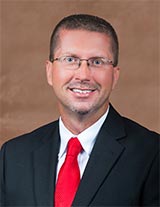
Michael “Mike” Scott represents District 5 in Lakeland. He’s a Lakeland native and civil engineer who lives in the Kathleen area and runs a trailer business in north Lakeland. He holds a bachelor’s in mechanical engineering and two master’s degrees from the University of South Florida. He was first elected in 2024 after running on slowing the pace of development until U.S. 98 and other road improvements catch up. His current term runs through 2028.
That’s the room. Five people. And two of those seats are up for election this year — Wilson’s, who could run again, and Santiago’s, who has already announced she won’t. The seats they hold get decided by you, IF you show up.
Where the Real Steering Happens
Here’s the part nobody tells you in high school civics. The BOCC meetings on Tuesday mornings are simply the moment when a decision gets made public. It is almost never the moment when the actual decision is made.
The truth is, by the time our five county commissioners sit at the big council table twice a month, the item in front of them has already been to the Friday Agenda Review four days earlier, during a public work session where the staff walks the commissioners through every line of every agenda item. Members of the public can attend that one, too, by the way, but hardly anyone does. Residents who only show up to the Tuesday meeting are arriving at the closing argument. Community members who track the Friday agenda review, write to their commissioner in advance, or attend a PRWC or TPO meeting are in the conversation while it still matters.
Before the Agenda Review, the item has been through one or more regional committees, and this is where it gets interesting. Polk County government doesn’t operate in a bubble. Commissioners and city officials sit on joint boards that decide things like:
Polk Regional Water Cooperative (PRWC). This is where Polk’s municipalities plan the long-term water supply that keeps your tap running. The current Phase III water shortage and recent burn bans were shaped here long before they hit the county website.
Polk Transportation Planning Organization (TPO).
This agency has been in charge of every road, sidewalk, trail, and transit project in Polk County since 1977. It covers more than 5,000 miles of roads and over 800,000 residents. Commissioners Wilson and Troutman both serve on its board. The TPO accepts public comments and runs a Transportation Adviser Network with about 250 residents who get briefed before plans are finalized. They are the ones who decide which roads get widened, which intersections get signals, and which corridors get state and federal dollars.
Florida League of Cities Legislative Policy Committees.
This includes five committees made up of municipal officials from all over Florida. Each committee covers a different slice of municipal life — finance and taxation, utilities and natural resources, public safety, intergovernmental relations, and development. They meet in the fall, October through December every year, to set the agenda each year for what cities will collectively ask the state legislature to do the following spring. What gets debated in those rooms becomes state law that overrides local decisions.
Central Florida Development Council and Ridge League of Cities.
These regional bodies are the economic development arm that recruits employers to build their business here instead of other neighboring counties. Economic incentives, business attraction, and shared infrastructure get hammered out before any individual city or the county takes a formal vote. They also provide a regional voice for our smaller municipalities like Lake Wales, Frostproof, Dundee, Lake Alfred, and Lake Hamilton — cities without a Lakeland-sized budget to fight for themselves in Tallahassee.
So, when your city commissioner walks into a Polk TPO meeting to advocate for a turn lane at the intersection where your kid waits for the school bus, that, right there, is your local voice being heard. When your BOCC commissioner sits on the Polk Regional Water Cooperative board to discuss whether to permit 2,000+ new homes near Bartow, this is the moment your input matters most. Remember, by the time it shows up as Item 7B on a Tuesday agenda, the math has mostly already been done.
Now They Are Teaching It in School

There’s an irony here worth mentioning. Starting back in the fall of 2022, Florida began requiring every middle school and high school student to pass the Florida Civic Literacy Exam (FCLE) in order to graduate. It’s an 80-question test; they have to score at least 60% to pass, and it covers exactly the kind of structural government questions we’re walking through right now. The state has decided that kids need to know how this works in order to leave high school. Not a bad idea, right?
The thing is, civics is not supposed to live just inside a classroom or on a test before adulthood. It is supposed to teach students how decisions are made, how public money is spent, how laws and policies move from an idea to a vote, and how ordinary residents can speak before those decisions become final. That lesson is happening right here in Polk County. If you ever feel like you should already know all this, and don’t, that is the State of Florida confirming we all need to be more informed. The kids today are required to know it. We adults, the ones already voting, get to figure it out on our own time.
Don’t worry, The Citrus Tea is here to help get you more informed. Not to tell you what to think, but to remove the barriers of social media that prevent us from hearing all the voices that should be present in the room, and to bring those voices together, right here, in one place. A place where we can listen and share and see that while we are spread over 2,000 square miles, we have a whole lot in common, and even more that needs to be talked about.
What You Can Actually Do
This is the part where most explainers get vague and tell you to “be more engaged in the civic process” and end the conversation. I did mention this was the longer answer. Let me be specific instead. Here are the things that actually do move the needle when it comes to decision-making at the city and county levels:
- Read the agenda before the meeting. Every Polk BOCC agenda is posted on the Polk County Government Calendar at polkfl.gov, the Thursday before each Tuesday vote. Your city’s agenda is posted on the city’s website on a similar schedule. The link to your city’s posting goes on our resource page next week. If you read nothing else, read the consent agenda — that is where the items the commissioners do not expect to debate get bundled together for a single vote. It is also where things sometimes slip through.
- Tune in and watch the Friday Agenda Review. It is livestreamed at Polk County TV. It isn’t guaranteed to keep you awake, but it is where the real conversation happens.
- Send an email by Monday at noon before a Tuesday vote. Your commissioner reads them. They actually do. Take five minutes, write a message about something you need them to know, and be sure to include your physical address. That is the cheapest (and quickest) civic act available to you.
The email format is pretty straightforward: [email protected]. Martha Santiago’s is [email protected]. Bill Braswell’s is [email protected]. And so on. - Show up once. Just once. Pick a meeting on a topic you care about — water, growth, the school district budget. Then, sit in the chamber audience. You do not have to speak, or even wear a suit. Just be visible. Commissioners count the room. They notice when residents are watching. They notice more when residents from their district are watching. If you absolutely can’t make it down to a meeting, you can listen to audio recordings from previous meetings on your city’s website.
- Parents, involve your children and teens in real civic life. Connect what they are learning in school to the place where they actually live. Watch a County Commission meeting together on PGTV. Pull up an agenda and ask your child to pick one item that affects roads, water, parks, schools, development, or public safety. Attend a city commission meeting, a school board meeting, a planning board meeting, or a county agenda review. Talk afterward about who spoke, what was decided, and what questions were never asked. Some families are already doing this. At a recent local government meeting, high school students attended alongside their parents — not as a field trip detached from real life, but as a front-row civics lesson in how their city and county works.
- If three minutes at a podium isn’t enough for you, Lake Alfred just launched a 6-week Citizens Academy whose first group of 25 graduates this month. Lakeland and Haines City both run their own Citizens Academies for residents 16 and up — Lakeland’s covers fire, police, parks, utilities, wastewater, finance, the airport, and community development. Students have entry points too: Lakeland’s Youth Council lets high schoolers make recommendations to the City Commission, Winter Haven’s Youth Leadership Council focuses on hands-on public safety, Bartow Police runs an Explorer Program for ages 14 to 21 interested in law enforcement, and the Polk County Sheriff’s Office offers Cadet Unit 1000 for students drawn to law enforcement careers, leadership, discipline, and good citizenship. Any of these are great opportunities to get involved in your local government.
There are almost half a millioN
registered voters in Polk County. only 33,000 cast a single municipal ballot.
That’s Just
7.3 %.
Voter registration isn’t the issue, it’s voter participation. Imagine if half of registered voters sent just one email, attended one meeting last year, or at a minimum, showed up to vote, the conversation in our cities and in this county would look very different. This is not a judgment, but I do hope it sends a wake-up call because the reality is that Polk County is moving forward whether your voice helps shape it or not. Will you?
Of course, not everyone has to grow up to work in government in order to have influence. The point is that we do all grow up living with government decisions. When we understand how a road project gets funded, how zoning changes get approved, or how a city budget is built, we are better prepared as a voter, a homeowner, a business owner, a parent, or simply a resident who knows when and how to speak up.
One of the easiest civics lessons we can all be reminded of is that local government is not some distant thing in Tallahassee or Washington, D.C. It is the meeting room in Bartow. It is the city hall down the road. It is the agenda posted online before the vote. It is the public comment period. It is the email sent before Tuesday morning. And sometimes, it is a room full of students realizing that they actually can have a voice because the adults making the decisions are not out of reach — they’re elected to listen.

The Citrus Tea is here to help keep you informed. That is the whole point. The decisions affecting your water bill, your school zone, your traffic, and your home value are happening on a schedule that is published in advance but largely ignored. We can change that part together.
The window to be heard is still open. You just have to know when to speak up and do it before that window closes.
The next regular BOCC meeting is Tuesday, June 2, 2026, at 9 a.m. in the County Commission Boardroom at 330 W. Church St. in Bartow. The next one after is June 16, same time, same place.