

Governor DeSantis Signs Five Public Safety Bills at Winter Haven Police Department, Addresses Teen Takeovers

Gov. Ron DeSantis signed five public safety bills into law Tuesday morning at the Winter Haven Police Department and issued a pointed warning to local officials who are not cracking down on so-called teen takeovers before he put pen to paper.
“We do not recognize any teen takeover. If you try that, you are doing that at your peril. And if the local officials are not holding you accountable, I’ll put somebody in there who will hold you accountable. We are not going to let the inmates run the asylum in the free state of Florida,” DeSantis said.
The five bills target law enforcement protections, repeat violent offenders, drug trafficking, career offender monitoring, and criminal gang membership. Attorney General James Uthmeier, FDLE Commissioner Mark Glass, and Department of Business and Professional Regulation Secretary Melanie Griffin joined DeSantis at the 10 a.m. event.
“These bills reinforce our commitment to making Florida the most law enforcement-friendly state in the union and the worst state in which to commit crimes,” DeSantis said.
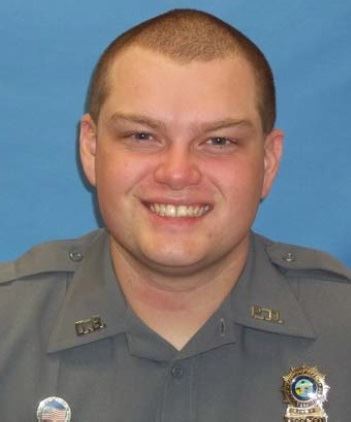
The centerpiece of the signing was Senate Bill 156, the Officer Jason Raynor Act, named for the Daytona Beach officer shot and killed in the line of duty in 2021. The law closes a gap that allowed the man responsible to be convicted of manslaughter without facing life in prison. Going forward, manslaughter of a law enforcement officer carries a mandatory life sentence in Florida. The law also bars the use of force against an officer acting in good faith and increases penalties for assault and battery on officers. It takes effect immediately.
Senate Bill 432 creates trafficking penalties for xylazine, the veterinary sedative known as “tranq,” increasingly found in the illicit drug supply, adds a concentrated kratom derivative to Florida’s Schedule I controlled substance list, and prohibits licensed retailers from selling nitrous oxide on their premises. The bill also increases penalties for marketing addictive substances to minors. Most provisions take effect July 1, with some taking effect October 1.
Senate Bill 436 allows a second battery offense to be elevated to a felony if the offender has a prior conviction for resisting an officer with violence, and adds felony battery resulting in bodily injury to the list of offenses qualifying for mandatory minimum sentencing under prison releasee reoffender status. It takes effect July 1.
Senate Bill 1332 tightens the Florida Career Offender Registration Act, requiring serious repeat offenders to report address and vehicle changes within 48 hours, submit to annual address verification, and carry a state ID marked with their career offender status. SB-1332 takes effect October 1.
House Bill 429 expands the criteria for establishing criminal gang membership under Florida law, including admissions made on social media, identification by the gang itself, and identification by a parent, guardian, or spouse. It also creates a legal definition for “gang-related language.” HB-429 takes effect October 1.
Sources: WTSP, June 16, 2026 (wtsp.com); WEAR TV, June 16, 2026 (weartv.com); Florida Senate Bill 156, 2026 Session (flsenate.gov/Session/Bill/2026/156); Florida Senate Bill 432, 2026 Session (flsenate.gov/Session/Bill/2026/432); Florida Senate Bill 436, 2026 Session (flsenate.gov/Session/Bill/2026/436); Florida Senate Bill 1332, 2026 Session (flsenate.gov/Session/Bill/2026/1332); Florida House Bill 429, 2026 Session (flsenate.gov/Session/Bill/2026/429)